


News Articles
About the Rice at Kurosugi
The Rice for Sushi At Kurosugi
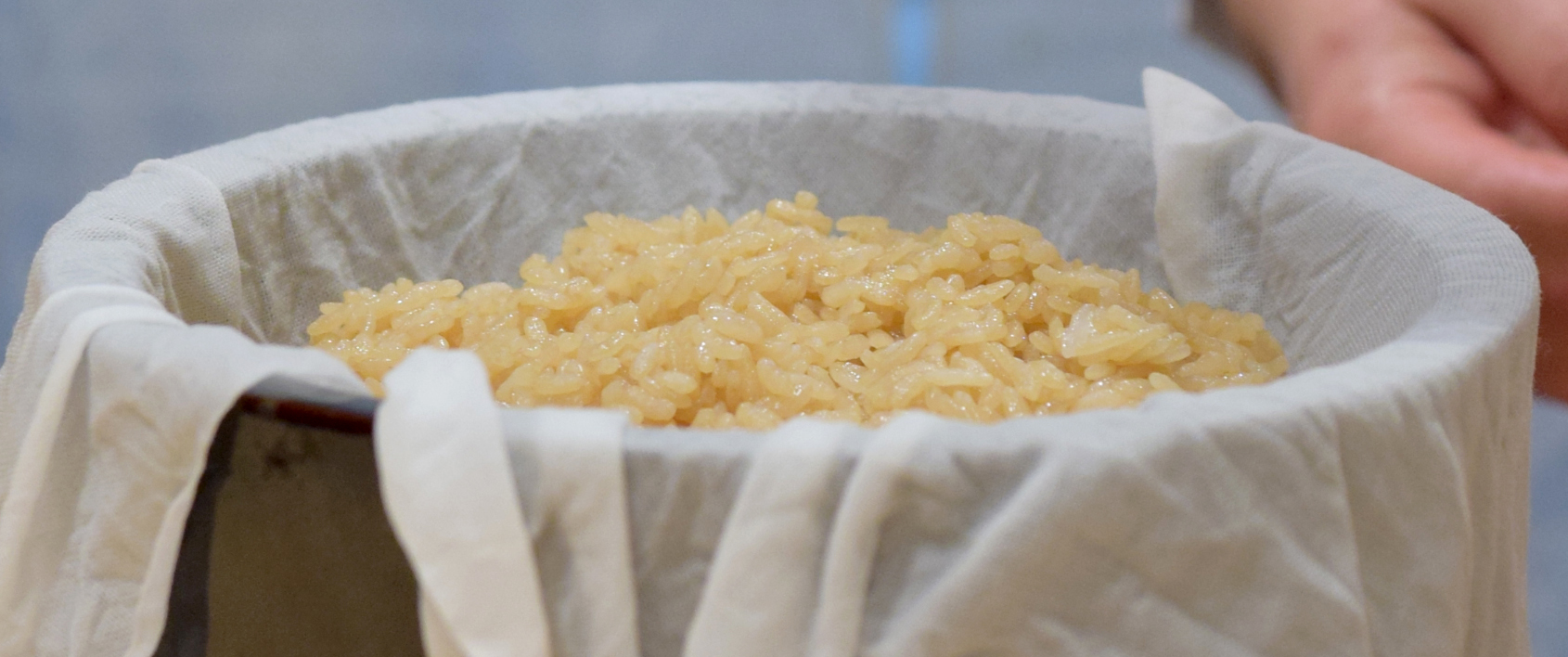
Kurosugi uses the best quality Hinohikari rice from Kagawa Prefecture.
In addition, rather than using sugar for its seasoning, Kurosugi uses akazu to season its sushi. Akazu is a mild red-colored vinegar which is made from sake lees, and is typically aged for 3-4 years. When stored, the sake lees turn into the reddish color from which it derives its name, “aka ” meaning red and “ zu ” meaning vinegar.
Akazu is not as sharp and sour compared to ordinary rice vinegar and has a perfectly balanced flavor which compliments the neta, the topping on the sushi. It is characterized by its low acidity, slightly sweet flavor, and reddish color. It brings a deep, flavorful, refreshing taste full of umami to the sushi. And because the akazu is naturally sweet, sugar is not needed. Just a little bit of sea-salt is all that is added.
Making and managing the sushi rice is quite time consuming and requires a lot of effort, such as keeping a hot water bottle container in the wooden container used for the cooked rice. This is done to keep the rice at body temperature and produce the most delicious rice for the sushi.
Useful Sushi Terms
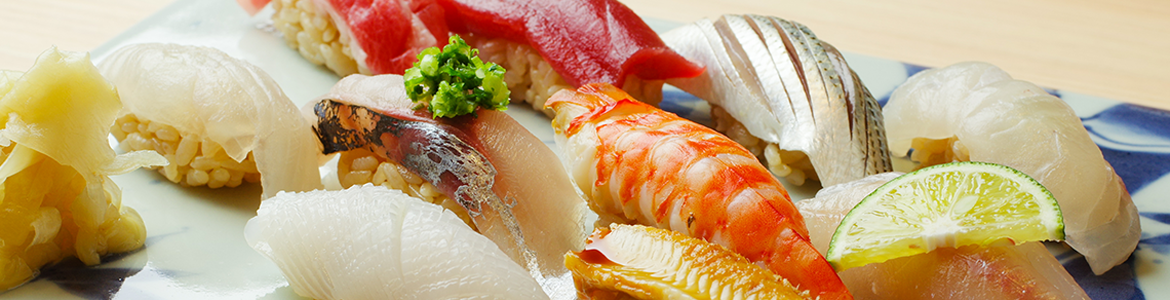
Here are some common and useful sushi terms that will make your Sushi experience even more enjoyable!
Basic & Important Terms:
・Neta (ネタ) : The topping of the sushi. Commonly fish and seafood.
・Shari (シャリ) : The rice of sushi. Seasoned with a combination of vinegar, sugar and salt.
・Omakase (おまかせ) : A term which is literally translated to “I will leave it to you” and meaning that the Chef will select and serve the dishes and ingredients special to that day or season.
・Taisho (たいしょう) : The head sushi chef (male and usually also the owner) of the sushi restaurant.
・Itamae (いたまえ) : The assistant sushi chef, as opposed to the Taisho.
・Sushiya (すしや) : A sushi restaurant.
Common Neta:
・Maguro (まぐろ) : Blue Fin tuna.
・Katsuo (かつお) : Bonito.
・Tai (たい) : Sea Bream.
・Kanpachi (かんぱち) : Amberjack
・Saba (さば) : Mackerel
・Aji (あじ) : Jack Mackerel
・Anago (あなご) : Salt water eel
・Unagi (うなぎ) : Fresh water eel;
・Hota-te (ほたて) : Scallop
・Awabi (あわび) : Abalone
・Ika (いか) : Squid
・Tako (たこ) : Octopus
・Ebi (えび) : Shrimp
・Kani (かに) : Crab
・Uni (うに) : Sea urchin roe
・Ikura (いくら) : Salmon roe
・Tamago (たまご) : Sweet egg omelette
※ Please note that ingredients served at Sushi Kurosugi will vary depending on the season.
Different Types of Sushi:
・Nigiri (にぎり) : The most common type of sushi in Japan. A nigiri generally consists of a strip of rice (shari) with a fresh topping (neta) placed on top. Traditionally eaten with the fingers and in one bite. Literally translates to “squeezed”.
・Maki (まき) : A “rolled” sushi, another common type of sushi and what many non-Japanese people think of when talking about sushi. Rice rolled with the toppings in the center and usually covered with seaweed, before being cut into 6 to 8 pieces.
・Hosomaki (ほそまき) : A thinner Maki-sushi which usually only contains one topping ingredient such as cucumber or tuna.
・Gunkan (ぐんかん) : A type of sushi similar to Nigiri, but with seaweed wrapped around the bottom half, creating a holder for more “runny” toppings, such as sea urchin or fish roe. Literally translates to “battleship” for its appearance.
・Chirashi (ちらし) : Slightly uncommon outside Japan. Shari rice (not made into any particular shape) with many different ingredients, sashimi and garnishes mixed in and scattered on top. Literally translates to “scattered”.
※ Please note that not all types are served at Sushi Kurosugi.
Other Related Foods:
・Nori (のり) : Dried seaweed, used frequently with sushi.
・Agari (あがり) : Complimentary green tea served at the end of the meal to cleanse the palate.
・Ocha (おちゃ) : Tea. Type of tea will vary.
・Dashi (だし) : Flavoring stock usually made from fish or seaweed.
・Shoyu (しょうゆ) : Soy sauce.
・Shio (しお) : Salt
・Ta-re (たれ) : A sweet soy sauce based sauce. Used commonly on eel and squid etc.
・Ponzu (ぽんず) : A slightly sour soy sauce with yuzu citrus flavoring.
・Gari (がり) : Picked ginger for palate cleansing between dishes.
Useful Japanese Phrases to Know:
“Wasabi wo kudasai.” – Please give me some wasabi. (Replace “wasabi” with what you would like.)
“Oishi desu!” – This is delicious!
“Sumimasen, korewa nanidesuka?” – Excuse me, what is this? (If unsure what the ingredient is.)
“Ote-arai wa dokodesuka?” – Where is the bathroom?
“Okawari kudasai.” – I would like another one of this. (drink or dish.)
“Okai-kei onegaishimasu.” – Check please.
“Gochisousama deshita!” – A greeting when you finish your meal and bidding the restaurant farewell.